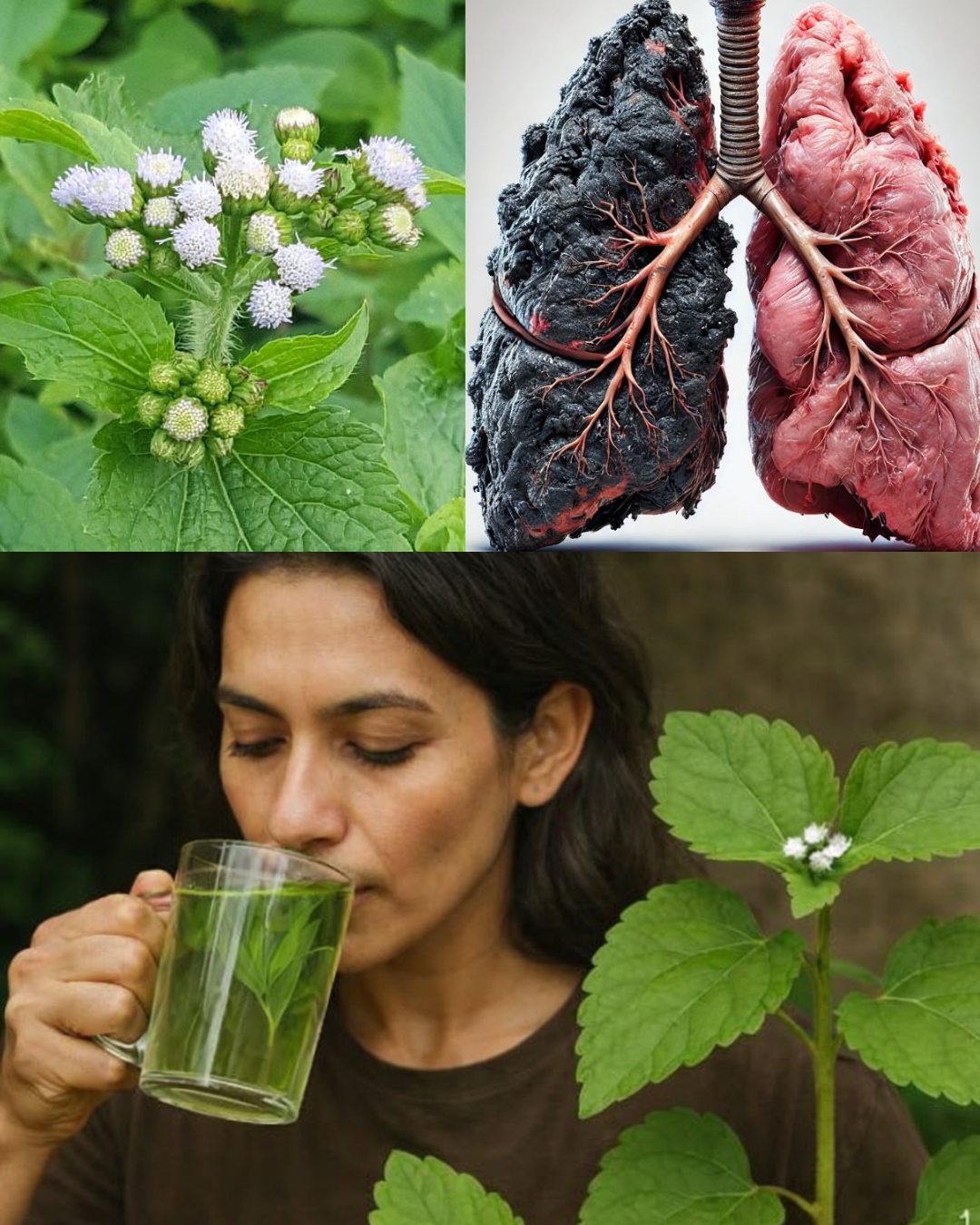
The Wild Plant by the Roadside: The Ancient Secret to Everyday Wellness (The “Billygoat Weed”)
Have you ever walked past a patch of wispy, purple-blue flowers growing wild by the roadside and wondered if this “weed” could actually be useful? Millions of people do just that every day, completely unaware that the plant many call Ageratum or Billygoat Weed (Ageratum conyzoides) has been a trusted home remedy in tropical countries for generations.
What’s frustrating? Most of us experience minor daily discomforts—an itchy mosquito bite, a persistent cough, or the occasional bloating—yet we continue to buy expensive products while nature’s gentle help grows freely right under our feet. What if simply making a habit of using this common plant in a safe and traditional way could make these minor annoyances easier to manage?
Keep reading, because toward the end, I’ll share a surprisingly easy preparation method that even busy people can add to their routine in under two minutes.
What Exactly Is Ageratum (Ageratum conyzoides)?
Ageratum conyzoides is a small annual herb that typically grows to a height of 30 to 90 cm (12 to 36 inches) with soft, oval leaves and clusters of tiny blue-lavender or white flowers. It thrives in sunny, disturbed areas—think roadsides, vacant lots, or garden corners. The plant gets its unusual English name (billygoat weed) from the slight goat-like odor some people notice when the leaves are crushed.
Traditional cultures in Africa, Asia, the Caribbean, and Latin America have used it for centuries in teas, lotions, and poultices. Modern laboratory studies are now exploring why these age-old practices made sense, identifying natural compounds such as flavonoids, essential oils, and coumarins that give the plant its interesting properties.
How Science Is Beginning to Explain Traditional Uses
Researchers worldwide have published dozens of studies on Ageratum conyzoides over the past decade. While more human clinical trials are still needed, the existing evidence points to several areas where the plant shows promising activity in laboratory and animal models:
Potential antimicrobial effects against common bacteria and fungi.
Notable anti-inflammatory action comparable to some reference compounds.
Gentle antioxidant protection.
Traditional use supported by preliminary pharmacological data.
These findings help explain why grandmothers in many countries still use this herb first when someone has a minor cut or upset stomach.
15 Science-Backed Traditional Uses You Can Safely Explore at Home
Here are the most commonly reported gentle uses, supported by both centuries of tradition and modern laboratory research:
Lotion for minor cuts and scrapes – Crushed fresh leaves release natural antiseptic compounds.
Relief from itchy insect bites – A cooled infusion of the leaves can soothe skin irritation.
Mild support for coughs and chest congestion – The warm infusion acts as a traditional expectorant.
Occasional bloating and gas – Small amounts of leaf tea have been used as a carminative (anti-gas).
Foot soak for tired or sweaty feet – Antifungal activity noted in several studies.
Simple mouth rinse – Traditionally used for fresh breath and gum comfort.
Warm compress for minor muscle aches – Anti-inflammatory compounds may help.
Scalp rinse in traditional hair care routines – Sometimes added to homemade hair lotions.
Mild fever reducer – Historically used to encourage gentle sweating.
Traditional remedy for diarrhea – The tannin-rich leaves help firm stools in folk medicine.
Natural insect repellent smoke – Dried bunches are burned in some rural homes.
Gardener’s hand soak – After working the soil, to clean minor scratches.
Cooling compress for the forehead – For hot days or mild headaches.
Poultice for minor burns or bruises.