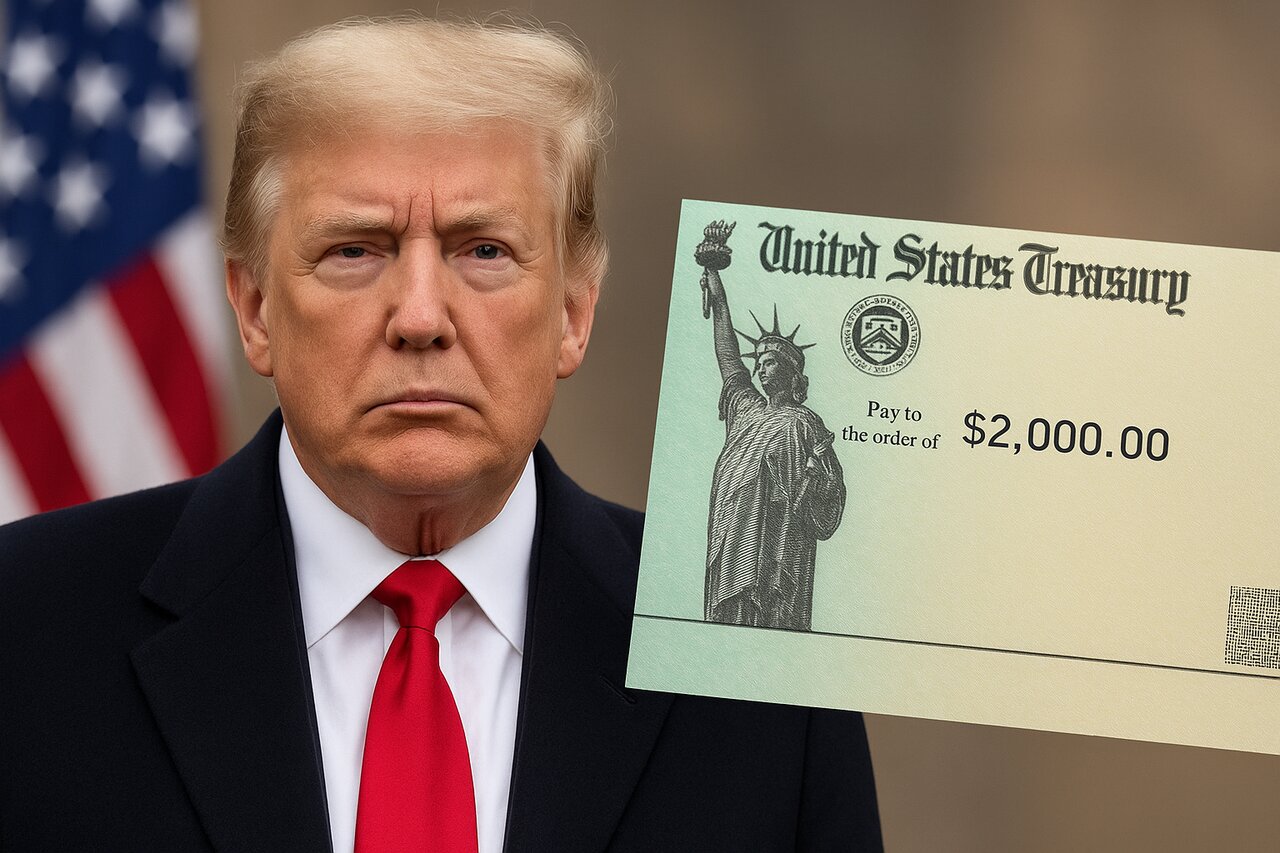
Trump’s announcement arrived at a moment when political tension, public frustration, and legal ambiguity are all building at once. It came as the Supreme Court considers whether his broad use of emergency tariff authority fits within constitutional limits. If the Court decides that it does not, the entire structure of his tariff strategy could collapse, and the government might be forced to return enormous sums to importers. Instead of delivering anything close to a national “dividend,” the administration could find itself obligated to unwind years of decisions. This possibility hangs over the debate like a storm that has not yet broken. Every statement about revenue or economic benefit exists under that cloud.
At the same time, many Americans feel worn down by rising prices, uncertain wages, and a national debt that continues to climb. When people hear a firm number such as two thousand dollars, they naturally look up and hope the idea carries real substance. Households across a wide range of incomes feel squeezed. Some struggle with groceries. Others face soaring housing costs. Many feel that they work harder each year while their savings shrink. In this environment, a promise of direct financial relief sounds appealing. It taps into a longing for stability and a desire for leaders who can translate plans into meaningful help rather than political performance.
Still, the financial reality behind tariff revenue presents a far more stubborn picture. Tariffs do bring money into the federal treasury. They also increase the price of imported goods. That cost is often passed along to businesses and consumers. The entire structure functions as a tax that disguises itself as a penalty on foreign producers, even though domestic buyers absorb much of the burden. The total collected since the beginning of the trade confrontation is about one hundred fifty one billion dollars. This is a large amount, but it is nowhere near the trillions referenced in campaign speeches. The gap between what is claimed and what exists exposes a tension between political messaging and economic fact.
Transforming the current pool of tariff revenue into a widespread payment or a broad tax cut would require far more than a presidential declaration. Congress would need to approve the plan. Agencies would need to design systems for distribution. The government would have to weigh any new benefit against the immense national debt, which now exceeds thirty seven trillion dollars. Even if lawmakers supported the idea, they would confront questions about fairness, eligibility, and long term consequences. Every version of the proposal touches a different set of interests. Some would argue that the revenue should support industries harmed by the tariffs. Others would push for targeted relief rather than universal payments. The political wrangling alone could consume months.
In the end, this episode reveals a larger truth about modern politics. Announcing bold ideas is easy. The public hears a clear figure or a dramatic promise and responds with curiosity or hope. Turning that promise into something legal, durable, and equitable requires patience, negotiation, and an honest confrontation with fiscal limits. Leaders often prefer the excitement of sweeping commitments. They rarely follow through with the painstaking work required to deliver actual stability for families. The contrast between the simplicity of the announcement and the complexity of the reality offers a reminder. Real relief demands more than ambition. It requires discipline, transparency, and a willingness to face the difficult details that speeches never mention.