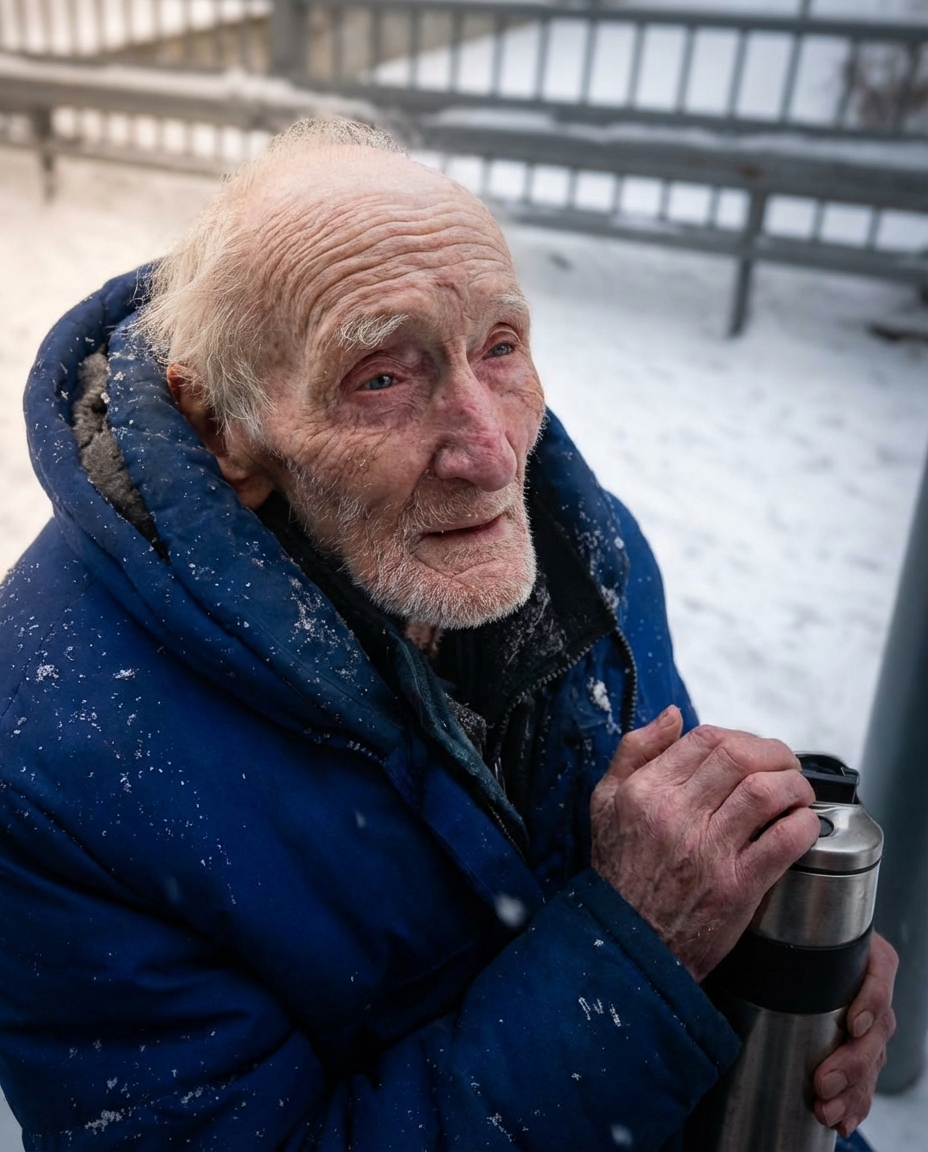
I thought kindness was a small, quiet thing—something you offered without expecting it to circle back. Every morning on my way to work, I handed a few dollars or a sandwich to the older man sitting on a bench near the library. He never asked questions, never told stories. He simply thanked me and told me to take care of myself. On Christmas Eve, as I prepared to go home to my first holiday alone after losing my husband, he looked at me with real fear in his eyes and said something that stopped me cold: “Don’t go home today. There’s something you don’t know.”
At first, I assumed grief was making me overreact. I had lost my husband only months earlier, and the world still felt fragile and unreal. But the man knew details about my life I had never shared—my name, my sister, even my late husband’s. His warning felt too specific, too urgent to ignore. Against my instincts for routine and logic, I changed my plans and spent the night elsewhere, uneasy but safe, replaying his words over and over in my mind.
The next morning, I returned to the bench looking for answers. That’s when the stranger finally explained who he was and why he’d been watching from a distance. He hadn’t been asking for help—he had been keeping a promise. What he revealed reshaped everything I thought I knew about my marriage, my loss, and the quiet life my husband had lived before me. It wasn’t a story of betrayal, but of unfinished responsibility and a truth my husband never had time to share.
By the end of that conversation, my grief hadn’t disappeared—but it had changed. Alongside the sadness was clarity, and alongside the loneliness was a new sense of purpose. The man on the bench hadn’t been a coincidence or a stranger at all, but a guardian of a truth that arrived at exactly the moment I was strong enough to hear it. That Christmas didn’t give me comfort—but it gave me something deeper: understanding, and a path forward I never expected.