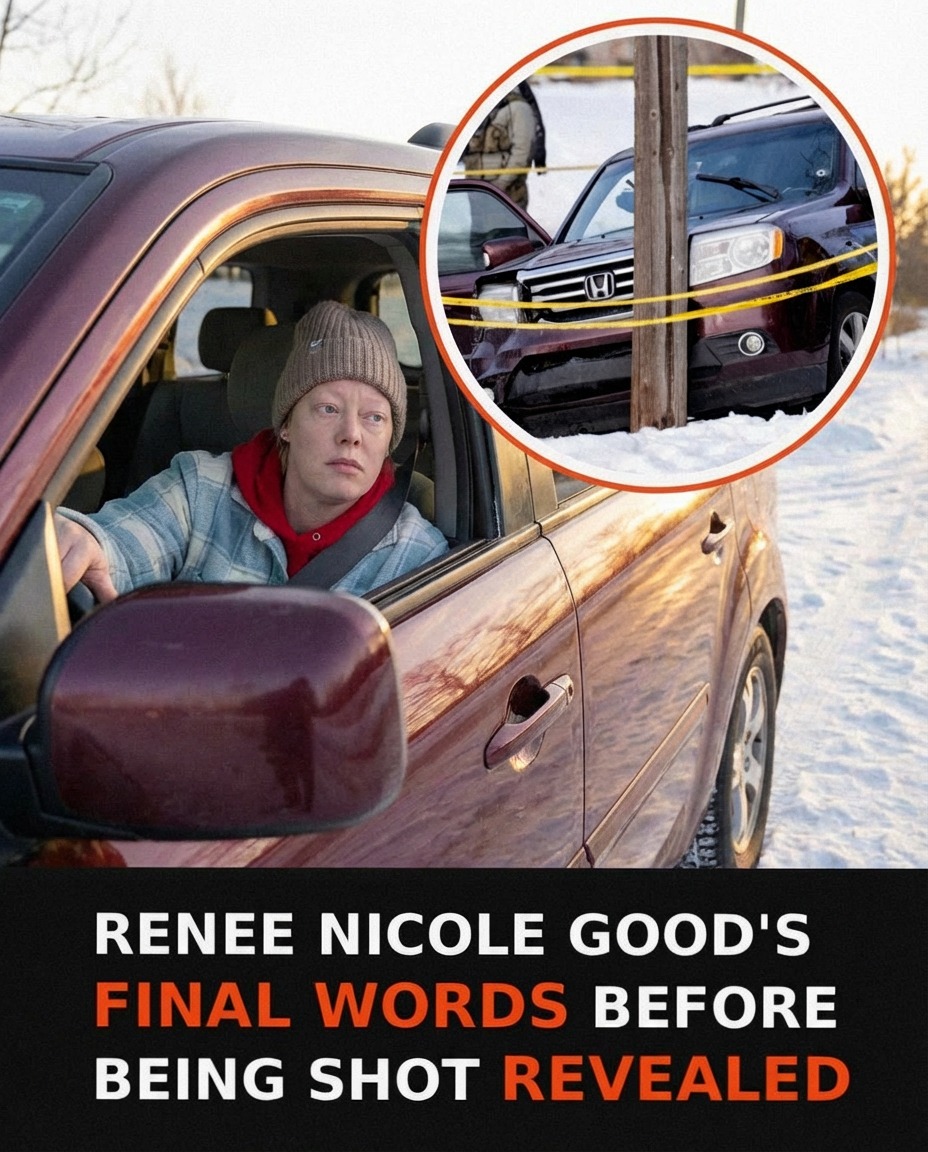
A newly released video has pulled the public into the final, unsettling moments of a fatal encounter between federal immigration agents and Renee Good on a quiet Minneapolis street. Filmed from an agent’s perspective, the short clip captures a scene that appears calm on the surface but quickly turns chaotic. What begins as a verbal exchange beside a parked SUV escalates within seconds, ending in gunfire and raising urgent questions about how and why the situation unraveled so rapidly.
The footage, shared publicly by a local media outlet, shows agents approaching Good’s vehicle during an enforcement operation in south Minneapolis. In the recording, Good speaks in a measured, non-confrontational tone, while her wife, Becca, films nearby and attempts to lighten the mood with jokes. The interaction does not immediately suggest danger, which has left many viewers shocked by how abruptly events change when an agent orders Good to exit the vehicle.
Moments later, the SUV is seen briefly reversing and then moving forward. Almost immediately, shots are fired, and the video cuts off. Other recordings circulating online show the vehicle traveling several blocks before stopping, after which Good was transported to a hospital and later pronounced dead. Federal officials stated that the agent involved believed his life was in danger and described the use of force as self-defense during a rapidly evolving situation. The agent has since been placed on administrative leave, a standard step following such incidents.
Eyewitness accounts and community reaction, however, add layers of complexity to the official narrative. Several witnesses told local media that the encounter appeared confusing and escalated far too quickly. The incident has sparked protests and renewed debate over the presence and tactics of U.S. Immigration and Customs Enforcement in local neighborhoods. As federal and state authorities navigate jurisdictional tensions during the ongoing investigation, the video remains a focal point—one that continues to fuel national conversations about enforcement practices, accountability, and the human consequences of decisions made in seconds.