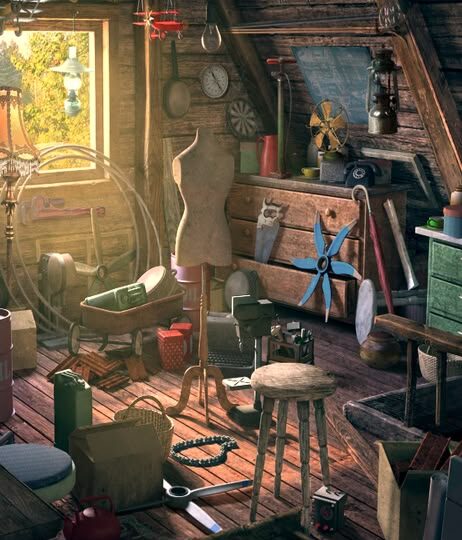
The afternoon sunlight filtered weakly through the attic window, dust motes dancing in the golden streaks.
I was only there for a practical purpose: reaching for a box of holiday decorations tucked behind a stack of old trunks.
The attic had always been a quiet, neglected space in the house, a place where the past quietly collected itself, layer upon layer, in cardboard and paper, in discarded holiday ornaments and forgotten keepsakes.
It was a room I visited infrequently, and yet, somehow, it had a way of revealing things I hadn’t known I was ready to find.
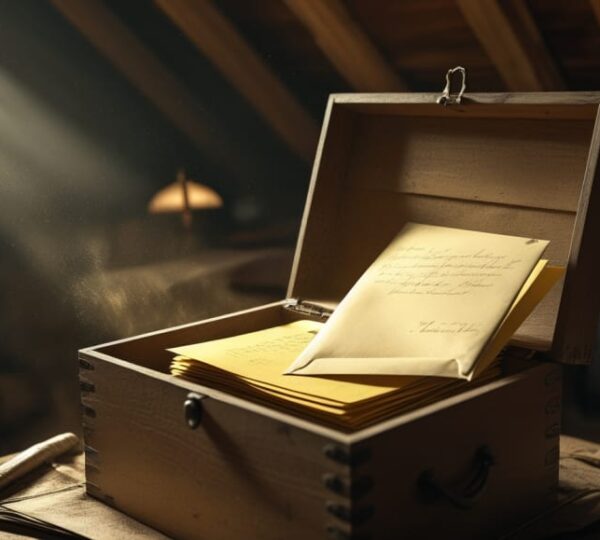
As I stretched to lift a box from a high shelf, a thin, yellowed envelope slipped loose, tumbling to the floor in a soft rustle.
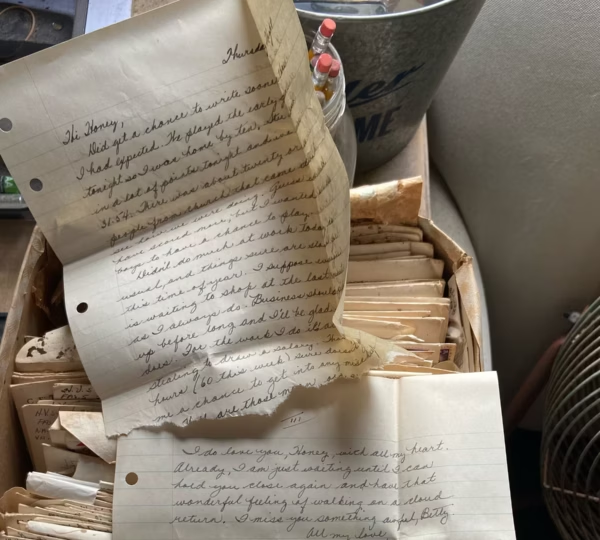
My heart gave an involuntary lurch as it landed at my feet. Something about it drew me immediately.
Perhaps it was the delicate curl of its edges or the way decades of dust had left a light imprint of age upon it. But when I saw my name written across the front in a familiar hand, the pull became irresistible.
It was the kind of moment you cannot anticipate—a sudden recognition that something from the past has been waiting patiently for you, hidden but not forgotten.
I knelt to pick up the envelope, running my fingers along the worn edges.
Decades had passed since the person who wrote it quietly disappeared from my life, leaving a void shaped by unanswered questions and the quiet ache of absence.
I had believed that I had moved on, built a life, and made peace with that silence.
Yet holding this envelope in my hands, the fragile paper tinged with the smell of old letters and faint ink, I realized that some stories never truly end.
They linger, like a breath held for years, waiting for the right moment to be exhaled and understood.
The letter was dated December 1991, a period of my life that now felt almost mythic in memory.
As I unfolded the paper, the handwriting—delicate, deliberate, tinged with the same personality I remembered—invited me back into a world that had once been vivid, immediate, and entirely mine.
Each sentence was a window into a younger self, and with each word, I was reminded of the raw, unfiltered emotions of that time: confusion, longing, and the painful misunderstandings that had silently pulled us apart.
She wrote about her own uncertainty, about believing I had chosen a different path without her, unaware of the silent hopes and fears I carried.
Reading it, I felt a strange combination of nostalgia and clarity. The absence that had once felt like betrayal or rejection began to make sense in a way it never had before.
There had been no malice, no loss of care—only the quiet erosion that occurs when words fail to reach the intended recipient, when decisions are made based on incomplete truths.
It was a gentle reminder of how easily lives can drift apart, not because love disappears, but because timing and understanding sometimes fail to align.
I spent hours in the attic that day, rereading the letter, lingering over phrases, letting memories wash over me.
The handwriting, the phrasing, even the slightly trembling punctuation—all of it carried the weight of someone trying to reach across an invisible distance, years before technology could bridge the gap instantaneously.
There was a depth to it that surprised me, a clarity and honesty that I hadn’t remembered. And beneath it all was a quiet, enduring tenderness that had not faded with time.
That night, the house long settled into a comforting stillness, I found myself compelled to look her up.
Curiosity, mingled with a quiet sense of destiny, led me to search for her online. Decades have a way of erasing footprints, and I did not expect to find anything. But there she was.
Older, yes, her face carrying the subtle marks of time, yet instantly familiar.
The recognition was immediate and disarming, like seeing a reflection of a younger self in someone who had also lived the intervening years with their own triumphs and losses.
Seeing her again brought a mix of warmth and reflection.
The immediacy of recognition collided with the long arc of time, creating a strange, almost magical feeling.
Memories surfaced—not just of shared laughter and conversations, but of silences, miscommunications, and moments we never had the chance to revisit.

I felt the odd mix of excitement and apprehension that comes with reaching across a chasm of years, unsure what might lie on the other side.
After several drafts, erasures, and second thoughts, I finally sent a message. I could have labored over it, trying to craft the perfect words or achieve some kind of literary symmetry. Instead, I chose honesty.
The message was simple, direct, and entirely unadorned. Sometimes, I thought, honesty matters far more than perfectly measured sentiment.
The moment of sending it was quiet, unassuming, yet it felt monumental. It was a single step toward bridging decades of absence.
When we eventually spoke again, it was not in the dramatic, movie-like way I had imagined.
There was no attempt to undo the past or pretend that the years apart had not existed. Instead, our conversation was filled with reflection, understanding, and the recognition of lives lived fully yet separately.
We spoke about the paths we had taken, the decisions we had made, and the people we had become.
There was laughter, of course, but also a profound sense of calm and grounding.
The intensity of our youthful emotions had transformed into a measured, thoughtful connection, tempered by the wisdom that only time can bring.
The letter, which had initially seemed like a portal to a wound that might never fully heal, instead offered a sense of closure.
It did not reopen pain—it illuminated understanding. It revealed that some separations are not the result of failing affection or loss of care, but of circumstances, timing, and incomplete communication.
The envelope in the attic had waited for decades, not to reignite old emotions, but to bring comprehension and reconciliation.
In the days that followed, I found myself reflecting on the strange and delicate interplay of memory and time.
How many letters, conversations, or small acts have been left unspoken, waiting for circumstances that never arrive?
How many connections fade not because of indifference, but because clarity is delayed too long? In holding the envelope, reading the words, and reconnecting after decades, I understood that some connections are resilient beyond expectation.
They may disappear from daily life, but they never vanish entirely—they wait for a moment when both parties are ready to meet with understanding, rather than expectation or regret.
Our renewed connection did not erase the past, nor did it attempt to recreate it.
We acknowledged the gaps, the miscommunications, and the years of absence. But in that acknowledgment was a profound freedom.
We were no longer tethered to the weight of what might have been; instead, we could appreciate what had always existed beneath the surface: the continuity of recognition, of care, and of the human tendency to remember and to understand.
Looking back, I see now that the attic, with its layers of dust, its forgotten boxes and decorations, was not merely a physical space.
It was a metaphorical one as well—a repository for memories, for unfinished stories, and for truths waiting patiently to be rediscovered.
The letter had been hidden, yes, but not lost. It had been waiting for the right moment, for the right readiness, to be acknowledged and understood.
And in that sense, the attic and the envelope were reminders that life, with all its interruptions and detours, carries within it the potential for reconciliation and understanding—even decades later.
Some connections, I have learned, do not fade with time. They are not erased by absence, neglect, or the passage of years.
Instead, they exist quietly, waiting for the moment when lives align once more in understanding.
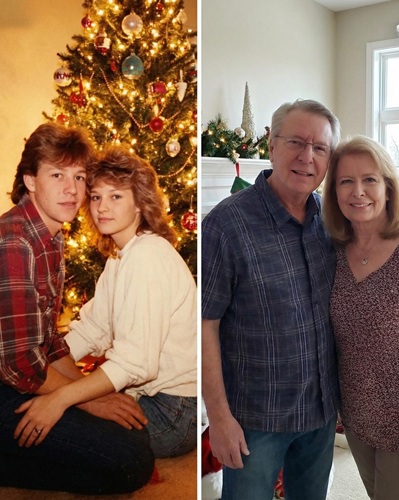
The letter, the envelope, and our renewed conversation were all evidence of that truth.
They showed me that the past does not necessarily return to reclaim what was lost—it returns to illuminate, to explain, and to offer the chance to understand fully, at last, what was always there.
In the end, it was not the reopening of old feelings that mattered, nor the rekindling of youthful longing.
It was the calm, grounded understanding that comes when one can look at the past with clarity, empathy, and acceptance.
It was the recognition that some bonds, though dormant, endure beyond expectation. And it was the quiet joy of knowing that even after decades of separation, the human heart remains capable of connection, comprehension, and renewal.
As I placed the envelope back on its shelf, careful to return it to its place among the attic’s accumulated history, I felt a sense of completeness I had not anticipated.
The attic, once merely a storage space, had become a conduit for understanding. The letter, once simply an artifact of memory, had become a bridge.
And in that moment, I realized that some stories do not end—they simply wait, as we wait, until the time is right for understanding and for the quiet, unhurried return of recognition.